If Lakewood home prices have you wondering how to make the numbers work, house hacking may be worth a closer look. It can be a practical way to lower your monthly housing costs by living in the property and renting part of it out, but the details matter more than many buyers expect. In this guide, you’ll learn which house hacking strategies may fit Lakewood, how financing rules affect your options, and what local due diligence to handle before you buy. Let’s dive in.
Why house hacking matters in Lakewood
Lakewood gives buyers a real reason to explore creative ownership strategies. According to Lakewood’s Strategic Housing Plan, the city views accessory dwelling units, or ADUs, as a modest way to add housing and support extra household income, even though relatively few have been permitted and built so far.
The cost side of the equation also helps explain the appeal. The same housing plan cites wide rent differences by housing type and age, and current market snapshots show why buyers pay attention to income potential. Zillow lists average rent in Lakewood at $1,684 per month as of April 5, 2026, while Redfin reports a March 2026 median sale price of $576,000, as summarized in the research provided.
What house hacking means
House hacking usually means buying a home you plan to live in and renting out part of it to offset your housing costs. That could mean a spare bedroom, a basement setup, an ADU, or one or more units in a small multi-family property.
The key point is that not all rental income is treated the same way by lenders. Income from a roommate, an ADU, or a duplex unit can each fall under different underwriting rules, so you want to separate the lifestyle idea from what can actually help you qualify.
Best Lakewood house hacking setups
Roommates in a single-family home
This is often the easiest setup to picture. You buy a single-family home, live there, and rent one or more bedrooms to roommates or boarders.
But this is also where buyers can get tripped up on financing. Under Fannie Mae’s boarder income guidelines, boarder income in your principal residence is generally not considered acceptable stable income except in limited cases. For HomeReady, boarder rent on a one-unit property may count only if the boarder has lived with you for 12 months and the rent is documented, and even then it is limited to up to 30% of your total gross qualifying income.
In plain terms, future roommate rent may help your real-world budget, but it usually should not be treated as automatic loan-qualifying income. That makes this strategy more useful for monthly cash flow than for stretching your approval amount.
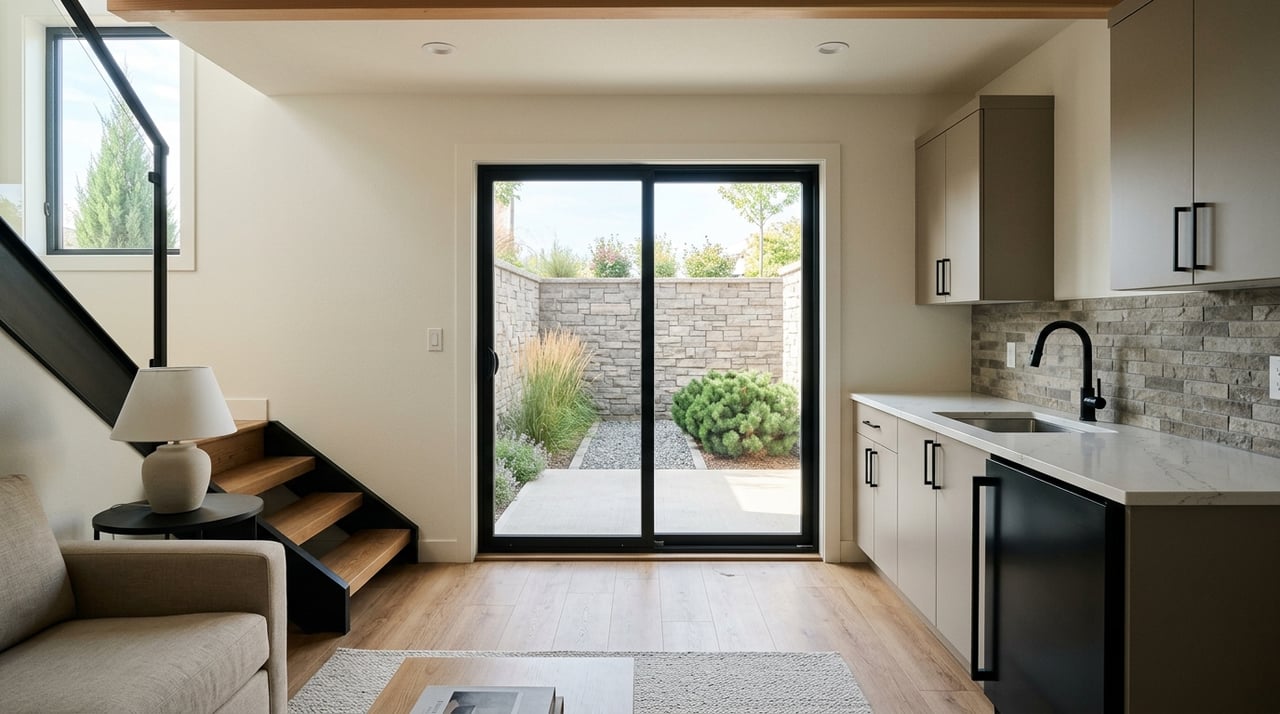
Basement apartment or ADU
A basement apartment or ADU can be appealing if you want more privacy than a roommate setup. In Lakewood, the city’s zoning code allows an ADU as an accessory use to a single-unit detached dwelling where those homes are allowed, limits the property to one ADU per lot, and caps the ADU at 1,400 square feet of gross floor area, according to Lakewood’s approved zoning standards.
From a financing standpoint, an ADU can help in some situations, but the rules are still narrow. Per Fannie Mae’s rental income guidance, rental income from an existing ADU on a one-unit principal residence may be considered only under specific conditions, including one ADU only, purchase or limited cash-out refinance transactions, and a cap that limits qualifying rental income to 30% of total qualifying income.
There is also a practical cost issue to keep in mind. Lakewood’s housing plan notes that utility connection costs can add significantly to ADU budgets, so an ADU should be evaluated as a full project, not just a simple add-on.
Duplex, triplex, or fourplex
For many buyers, this is the most classic version of house hacking. You live in one unit and rent out the others.
This setup can offer a clearer financing path than a roommate strategy. Under Fannie Mae’s rental income rules, rental income from a two- to four-unit principal residence can be eligible when you occupy one of the units. If you are using HomeReady on a two- to four-unit purchase, Fannie Mae also requires at least a 3% borrower contribution from your own funds unless a grant applies.
If you want a house hack that behaves more like a true small investment property while still being owner-occupied, this is often the structure buyers look at first. It can create stronger income separation between your space and your tenants’ spaces.
Short-term rental strategy
Some buyers ask whether short-term rentals are the easiest way to boost income. In Lakewood, they are usually more complex than long-term renting.
The city’s short-term rental license requirements require proof of primary residence, a third-party home inspection, at least $500,000 in liability insurance, a community notice form, and HOA covenants if applicable. Lakewood defines a short-term rental as a rental of a primary residence for fewer than 30 consecutive days.
That does not mean short-term renting is impossible. It does mean you should treat it as a regulated use with licensing, insurance, and property-specific review, not as a quick workaround.
Financing basics for buyers
If you are shopping for a house hack in Lakewood, your first loan conversation will often involve FHA or low-down-payment conventional financing. According to HUD’s FHA guidance, FHA single-family programs are limited to one- to four-family owner-occupied principal residences, and HUD’s 2025 consumer materials say the minimum required investment is 3.5% in most cases.
On the conventional side, Freddie Mac’s Home Possible program can go as low as 3% down for eligible borrowers, as noted in the research provided. That can make a multi-unit or ADU strategy more approachable for buyers who want owner-occupied financing with a lower entry point.
The big takeaway is simple: projected rent does not always equal qualifying income. Lenders look closely at where the rent comes from, whether the unit already exists, how the property is structured, and what documentation supports the income.
Run the math the right way
One of the biggest mistakes buyers make is using gross rent instead of net rent. If you expect to collect $1,500 from a unit or roommate, that does not mean your housing cost drops by the full $1,500 every month.
You need to account for the full monthly housing payment plus the ongoing costs of being a landlord. That includes vacancies, repairs, utilities, insurance, turnover, and any setup or compliance costs that apply to the property.
A simple way to think about it is this:
- Start with your full monthly housing cost
- Estimate realistic rent, not best-case rent
- Subtract expected vacancy and maintenance costs
- Add any extra utilities, insurance, or licensing costs
- Compare the result to your comfort level, not just your lender maximum
This is especially important because Fannie Mae’s rental income guidance treats income differently depending on whether it comes from a boarder, an ADU, a two- to four-unit principal residence, or another property type.
Don’t forget Lakewood and Jeffco due diligence
A property that looks perfect for house hacking online may not work the way you expect in real life. Before you rely on projected rent, verify the legal and financial details for that exact property.
Your checklist should include:
- Zoning and permitted use
- Existing permits and code compliance
- HOA rules, if applicable
- Lender underwriting requirements
- Insurance requirements
- Tax impact and operating costs
Property taxes matter here too. Jefferson County explains that property taxes are based on actual value, assessment rate, and mill levy. For tax year 2025 payable in 2026, residential property is assessed at 6.25% for local governments and 7.05% for school districts, and mill levies are finalized each December, so current-year numbers should always be verified before you build your budget.
How to shop smarter for a Lakewood house hack
The best house hack is not always the one with the highest projected rent. It is the one that fits your financing, your risk tolerance, and the local rules for the property.
When you are touring homes, ask practical questions early. Is there an existing ADU or just space that could someday become one? Is the basement legally configured for the intended use? If it is a multi-unit property, how will the rental income be documented for underwriting? If it is in an HOA, what restrictions apply?
A good buying strategy is to narrow your search by property type first, then confirm whether the income plan is realistic. That approach helps you avoid falling in love with a property based on rental assumptions that may not hold up.
A steady approach works best
House hacking can be a smart path into ownership in Lakewood, especially if you want to reduce your monthly costs while building equity. But the strongest plans are the ones built on verified zoning, realistic numbers, and financing rules that match the property.
If you want help comparing owner-occupied options in Lakewood, from single-family homes with ADU potential to duplexes and fourplexes, Johnny Lee can help you evaluate the numbers, the financing path, and the property fit before you make a move.
FAQs
Can roommate rent help me qualify for a Lakewood house hack?
- Sometimes, but not automatically. Fannie Mae’s boarder income rules allow it only in limited cases with documentation requirements.
Can ADU rent count when buying a home in Lakewood?
- In some cases, yes. Fannie Mae’s rental income guidance says an existing ADU on a one-unit principal residence may be considered under specific limits and documentation rules.
Are duplexes and fourplexes good for house hacking in Lakewood?
- They can be, because owner-occupied two- to four-unit properties may allow eligible rental income treatment under Fannie Mae guidelines.
Is short-term rental house hacking easy in Lakewood?
- Usually not. Lakewood requires a short-term rental license and specific documentation tied to a primary residence.
Do owner-occupied house hack loans require you to live in the property?
- Yes, for the owner-occupied FHA scenarios discussed here, the home must be your principal residence under HUD guidance.