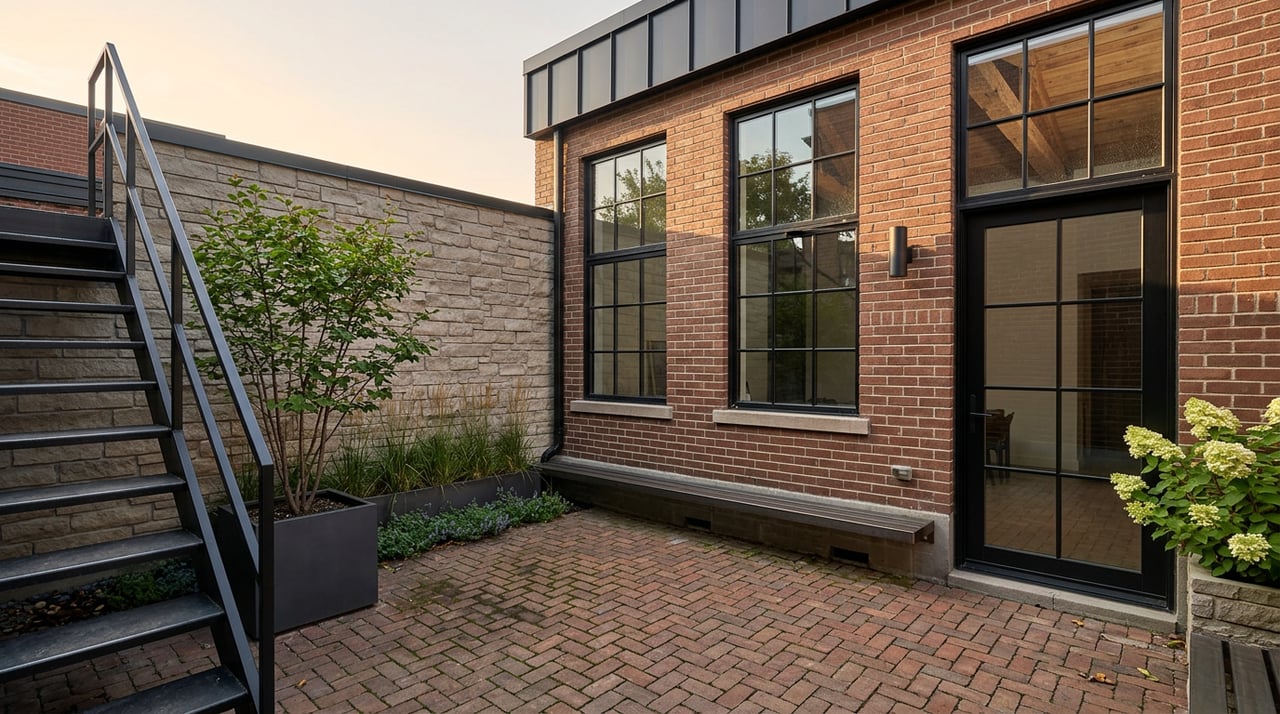
For twenty years, visitors explored RiNo Art District without a central welcome point. There was no reception desk, no single building where a stranger could walk in and ask what was happening that weekend. You wandered into a gallery because the door happened to be open, or you followed music down Larimer Street until you found where it was coming from. The district became one of Denver's busiest.
On August 7, that changed. RiNo Art District opened its Creative District Welcome Center inside RiNo ArtPark, a permanent building built specifically to greet the people who show up here. More than 12.4 million people visited the district in 2025, according to reporting from Denverite, and for the first time, a fixed number of them will have somewhere to walk in and ask a question instead of guessing. The Welcome Center adds a place for visitors to ask questions, while the expanded First Friday calendar offers another way to plan a visit.
First Friday's Expanded Calendar
First Friday in RiNo used to mean one thing: galleries and studios stayed open late on the first Friday of the month, and you went if you felt like it. There was no produced program, no confirmed start time, no lineup. In 2026, RiNo Art District introduced a produced series with a name, a run time, and a season. According to an April announcement from ColoradoBiz, the series launched May 1 with only three dates planned for the year: May, August, and September.
By the time August arrived, the plan had grown. RiNo Art District's own event calendar now lists four upcoming dates through the end of 2026, and each one carries a different anchor:
| Date | What's different this time |
|---|---|
| Sept 4 | The 'Welcome Back' anniversary exhibition continues inside Truss House and, for the first time, the new Welcome Center; La Vie En Rose, a Parisian-style champagne bar, opens the same night in the former Noble Riot space at 2636 Walnut St |
| Oct 2 | Folded directly into Art RiNo 2026 rather than standing on its own |
| Nov 6 | Staged directly at the ArtPark Welcome Center and Gallery rather than Truss House alone |
| Dec 4 | Combined with the RiNo-Ful Life Holiday Market and the ArtPark tree lighting |
Between May and December, the art walk expanded into a produced series, with scheduled dates paired with a larger program. That's a different neighborhood rhythm than the one most residents grew up with here, and it means checking a date now buys you more information than it used to.
What Actually Happens on September 4
Take the closest date on that list. September 4 runs from 5 to 9 p.m. at RiNo ArtPark, and the headline act is the continuation of "Welcome Back," the exhibition marking the district's twentieth year. What makes this particular Friday different from a typical exhibition night is where it's happening: inside Truss House, which residents already know, and inside the Welcome Center, which nobody has been able to walk into before this year.
The same night, a few blocks over, La Vie En Rose opens its doors in the former Noble Riot space at 2636 Walnut Street, running 5 to 11 p.m. Earlier reporting from KDVR had this Parisian-inspired champagne and cocktail bar slated for a spring opening. Spring came and went. The bar is now timed to land on this specific First Friday instead, which is exactly the kind of detail that matters more under a produced calendar than it did under the old system. Show up on a different Friday expecting a debut, and you'll find a locked door instead of a launch.
The Kitchens Are Turning Over Faster Than the Signage
RiNo is home to more than 100 small businesses, based on figures cited in the Underground Music Showcase's 2026 announcement, and the restaurant lineup among them keeps changing shape. Two openings this month are worth knowing about before you make weekend plans out of habit.
Risica is chef Andrea Frizzi's newest project, landing in RiNo's Edit building alongside MAKfam. Frizzi built his name on Il Posto and Vero Italian, and Risica strips that experience down to something more affordable: pizzas, charcuterie, and small plates, with most items priced at $20 or less. Westword reported in July that the opening was targeted for the end of August. If it hasn't opened yet, it's close.
A few blocks away, Heretík has already opened and already landed on 5280's list of the best new places to eat and drink for summer 2026. Chef Theo Adley, known locally for Marigold in Lyons, brought a Basque-focused menu to RiNo that leans on seafood sourced from both coasts, a rotisserie oven turning out crisp "naked neck" chicken, and a wine and cider list built around Basque txakoli. The fact that a chef with a destination restaurant already drawing diners out to Lyons chose to open his next project inside RiNo, rather than downtown or in a more established dining corridor, says something about where serious kitchen talent is placing its bets right now.
Why a District Built Itself a Front Door After Twenty Years
The Welcome Center didn't appear out of nowhere. RiNo currently runs through three separate organizations, each with a different job and a different pot of money, according to reporting from Denverite. The Business Improvement District handles cleaning crews, tree maintenance, and safety. The General Improvement District finances streetscape work and larger infrastructure projects, including debt service tied to Brighton Boulevard improvements. The RiNo Art District nonprofit funds artist stipends, subsidized studios, and community programming.
In Denverite's reporting, Terry Madeksza, executive director of the RiNo BID, explained the logic behind investing in cleanliness and safety infrastructure: "People choose to spend their time and money when they feel comfortable and safe." That's the case for funding sidewalks, lighting, and cleanup crews even when the payoff is invisible to most visitors.
It's also the reason a permanent Welcome Center exists at all. More than 12.4 million visitors in 2025 generated roughly $10.6 million in sales tax revenue for the district, per the same Denverite reporting. That kind of volume is what makes a fixed building, staffed and open year round, worth the investment after two decades of pop-up programming and informal ways of exploring the district. The building is a visible addition in a district where the three organizations have distinct roles in shaping public space.
If You Live Here
A few things worth keeping on your radar for the rest of the year:
- Mark September 4 if you want to see both the Welcome Back exhibition inside the new Welcome Center and catch La Vie En Rose's opening night before the novelty wears off.
- Circle October 2 for Art RiNo 2026 programming. It's not a standalone First Friday this time, it's folded into the larger festival.
- Try Risica before it needs a reservation. An end-of-August opening from a chef with Frizzi's track record rarely stays a secret for long.
- If you haven't tried Heretík yet, it's already on 5280's short list of the best new restaurants in Denver this summer, which tends to mean waits get longer, not shorter.
The Trade-Off Worth Noticing
None of this makes RiNo a worse place to live. It makes it a different kind of place to live in than it was even a year ago. The wander-in-and-find-out version of the district isn't gone, but it now shares space with a produced calendar, a staffed building, and a governance structure managing budgets in board meetings. If you've called RiNo home for a while, the shift is worth clocking: the neighborhood that used to reward showing up now rewards checking the date first.
Neighborhoods that build infrastructure like this tend to see their housing markets move with it. If you're watching RiNo, or thinking about what a district changing this quickly means for your own next move, Johnny Lee has spent more than a decade tracking how Denver's neighborhoods turn over block by block. Get your instant home valuation to see what that shift might mean for your own address.